
Our ProgramsCapital, conservation, and infrastructure — aligned with agriculture’s reality.
Healing Soils Foundation supports regenerative agriculture by funding the places where farmers most often get stuck: upfront costs, reimbursement delays, infrastructure bottlenecks, and market access. Our programs are designed to meet farmers at the moment capital is needed most, so good projects can move forward without failure or delay.
Regenerative Farmer Assurance Fund (RFAF)
RFAF provides flexible bridge capital to organic and regenerative farmers when public funding, market payments, or seasonal cash flow gaps threaten to stall important work.
-
Launched in 2024 in response to federal reimbursement delays and widening cash-flow gaps for conservation practices, the Regenerative Farmer Assurance Fund (RFAF) was created to ensure that farmers aren’t forced to pause critical soil-health investments when public dollars stall. In its first year, RFAF supported producers navigating delayed USDA programs, frozen payments, and volatile market timelines—demonstrating a need for rapid, flexible capital that aligns with the real timing of agriculture.
Over time, the fund has evolved to reflect the realities on the ground. Round 3 now supports market contracts, practice-linked infrastructure, and emerging regenerative opportunities requiring upfront investment. This model reduces reliance on high-cost, short-term debt and prevents farms from losing momentum during administrative delays.
RFAF is grounded in a regenerative finance approach: dollars circulate through recoupable grants, are repaid when reimbursements arrive, and are redeployed to help the next farmer. The fund becomes more resilient with each cycle, increasing the impact of every philanthropic contribution. Instead of extracting value, RFAF recycles capital, strengthens rural economies, and accelerates the adoption of soil-health practices—all while keeping farmers moving forward.
-
Description text goes hereApply when a gap emerges
Farmers submit a short application with documentation showing a delayed reimbursement, signed market contract, or time-sensitive practice-linked need.Rapid review
Healing Soils Foundation assesses readiness, timing, regenerative impact, and documentation. We prioritize projects that would face disruption without support.Flexible, upfront capital
Approved farmers receive a recoupable grant to keep conservation projects and market commitments on track—without taking on high-interest debt.Implementation continues
Farmers purchase inputs, rent equipment, install practice infrastructure, or fulfill contracts with the funds they would otherwise be waiting on.Repayment when funds arrive
When the delayed reimbursement or contracted payment is issued, farmers repay the grant. Those dollars are immediately redeployed to support the next producer.Conversion when funds don’t materialize
If a validated reimbursement ultimately never arrives despite signed contracts, the grant converts to non-recoupable aid—protecting farmers from carrying additional financial burdens.Continuous recycling
This regenerative finance model circulates philanthropic dollars instead of spending them once, accelerating adoption of soil-health practices across the region.
-
Up to $50,000 per farmer, for larger infrastructure grants, farmers are encouraged to reapply as additional funds are needed.
Rolling applications – funds are distributed as available.
Farmers reimburse the fund if and when their delayed public funding is received.Description text goes here
-
Description text goes hereApplicants must:
Operate in one of the listed Midwest states (Illinois, Indiana, Iowa, Kansas, Michigan, Minnesota, Missouri, Nebraska, North Dakota, Ohio, South Dakota, and Wisconsin) .
Be certified organic or actively adopting regenerative practices (e.g., cover crops, diverse rotations, reduced tillage, managed grazing, prairie/perennials, buffer strips).
Demonstrate a verifiable trigger for the bridge (choose one or more):
Documented public reimbursement or grant approval (EQIP, CSP, REAP, CRP, FLSP, etc.).
Signed buyer/market contract or purchase order requiring upfront investment.
Clear time-sensitive infrastructure need tied to practice adoption with proof of future market.
Evidence of emerging market opportunity (e.g., retailer/processor letter of intent) contingent on practice or capacity.
-
Click the form HERE.
Rebuild Midwest
Many regenerative farms are ready to grow, but lack the processing, storage, and distribution infrastructure required to reach market efficiently. Rebuild Midwest supports projects like grain storage, regional processing hubs, milling, and meatpacking facilities so farmers can keep more value local and build more durable supply chains.
-
Across the Midwest, farmers are asked to adopt regenerative practices within systems that were never built to support them.
Many regenerative producers face:
Limited or outdated on-farm and regional infrastructure
Processing bottlenecks that delay harvest, sales, or market access
Capital gaps when USDA or public funding is delayed or insufficient
High upfront costs that traditional lenders are unwilling to finance
Without targeted, flexible support, even the most promising regenerative operations can stall—not because the practices don’t work, but because the systems around them do not.
RFAF is grounded in a regenerative finance approach: dollars circulate through recoupable grants, are repaid when reimbursements arrive, and are redeployed to help the next farmer. The fund becomes more resilient with each cycle, increasing the impact of every philanthropic contribution. Instead of extracting value, RFAF recycles capital, strengthens rural economies, and accelerates the adoption of soil-health practices—all while keeping farmers moving forward.
-
Rebuild Midwest provides strategic capital and support for infrastructure projects that unlock regenerative agriculture at scale.
We support projects that:
Strengthen regional supply chains
Support farmer-owned or farmer-serving infrastructure
Reduce risk during periods of policy, market, or reimbursement uncertainty
Complement public funding rather than replace it
Support may include:
Grants for infrastructure planning, equipment, or upgrades
Recoupable grants that bridge timing gaps tied to USDA or other reimbursements
Catalytic funding that helps projects reach financial sustainability
This approach allows philanthropic dollars to do more—crowding in additional capital and keeping regenerative practices economically viable.
-
Rebuild Midwest focuses on infrastructure that directly supports regenerative and organic farming systems, including:
Grain cleaning, storage, and aggregation
Cold storage and post-harvest handling
Small- and mid-scale processing (including meat and poultry)
On-farm or regional equipment that reduces reliance on extractive systems
Shared infrastructure serving multiple regenerative producers
Projects are selected based on their ability to deliver measurable farmer benefit, long-term utility, and alignment with soil health and climate resilience goals.
-
Infrastructure determines who gets to farm—and how.
When regenerative farmers lack access to appropriate infrastructure:
Costs rise
Markets shrink
Risk concentrates on individual producers
Progress stalls at precisely the moment it should scale
By rebuilding the physical backbone of the food system, Rebuild Midwest helps ensure that regenerative agriculture is not just environmentally sound—but economically durable.
-
Rebuild Midwest is part of Healing Soils Foundation’s broader commitment to regenerative finance—capital that is patient, flexible, and designed around the realities of farming.
Together with our other programs, we are building systems that:
Keep farmers in business during uncertainty
Strengthen rural and regional economies
Protect soil, water, and climate for the long term
-
If you are a farmer, processor, funder, or partner working to strengthen regenerative agriculture in the Midwest, we’d love to connect.
Rebuild Midwest is about more than infrastructure. It’s about rebuilding the systems farmers need to steward our shared future.
Additional Programs
Restore Midwest is an innovative partnership between Healing Soils Foundation and Zero Foodprint that helps farmers adopt regenerative practices that improve soil health, biodiversity, and climate resilience. By supporting the upfront steps required to access larger pools of public conservation funding, the program helps reduce the financial and administrative barriers that often slow adoption. The result is more farmers implementing regenerative practices, and more philanthropic dollars helping unlock broader environmental impact across the region.
Restore Midwest
Paul Bickford Legacy Grant
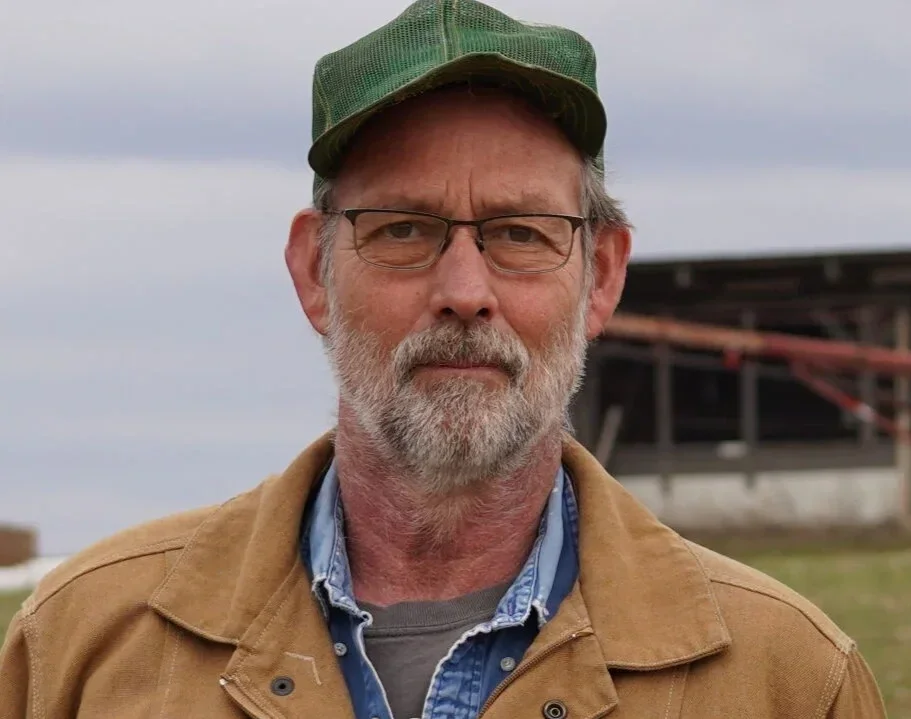
This grant supports Midwestern organic and regenerative farmers that are leaders in their community, actively sharing the principles of regenerative agriculture, and strengthening the regional foodshed to revitalize our soils.
This grant honors the legacy of Paul Bickford, a beloved friend, mentor, and innovative organic farmer. Paul, who passed away in a farm accident on August 23, 2022, was a pioneer in transitioning from conventional to organic farming practices. His journey began with his father Melvin in Sauk County, before he established the Bickford Diary in Ridgeway in 1978.
In 1992, Paul and his family converted their confinement dairy operation to rotational grazing and became strong advocates for this movement. Over the last decade, Paul transitioned to organic grain farming under the name Bickford Organics. Paul was a tireless advocate for organic farming and nurturing the next generation of farmers. He served on Wisconsin's Department of Agriculture, Trade, and Consumer Protection's Organic Advisory Council and the USDA Advisory Committee on Beginning Farmers and Ranchers. His contributions were numerous, and his legacy continues to inspire.
Check back soon for the next round of funding!